
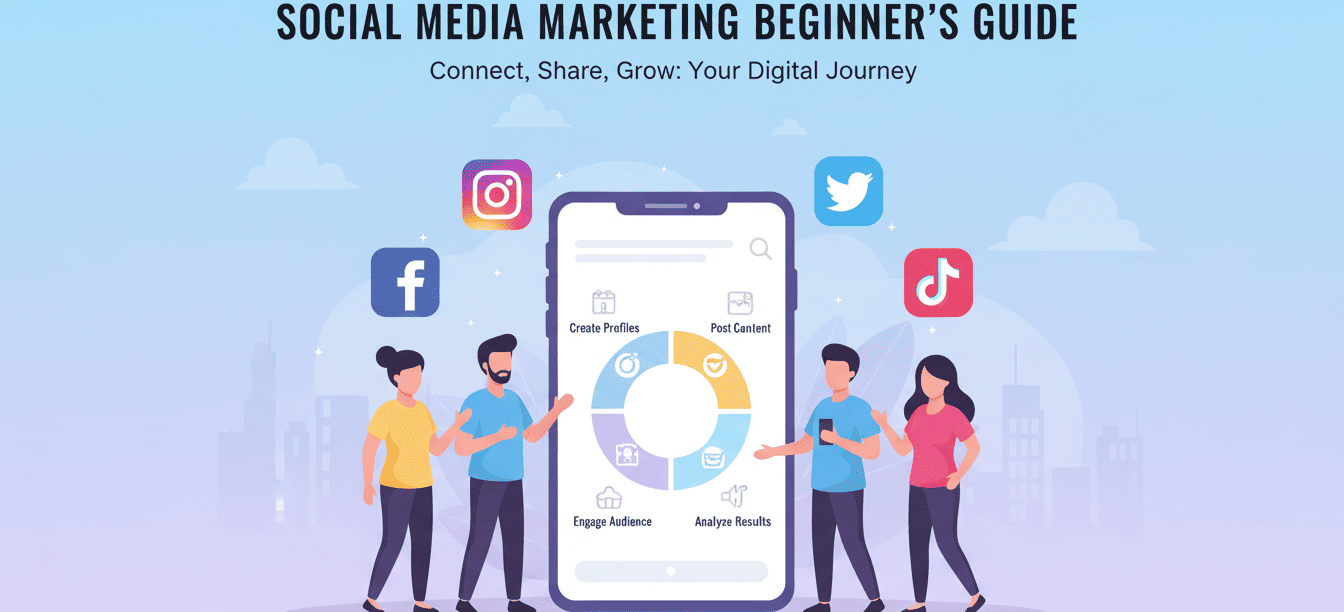

Social Media Marketing Basics Every Beginner Should Know
Fact: “Over 4.9 billion people use social media worldwide, making it one of the most powerful platforms for marketing.” (ref: ChatGPT)
Social Media Marketing (SMM) is one of the fastest-growing fields in digital marketing. It allows businesses and individuals to connect directly with audiences, share content, and build loyal communities online. The Social Media Marketing beginner’s guide will walk you through everything you need to know—from what SMM is to creating a strategy and tracking results.
Table of Contents
- Social Media Marketing Basics Every Beginner Should Know
- What is Social Media Marketing?
- Types/Elements of Social Media Marketing
- Why is Social Media Marketing Important?
- How to Get Started with Social Media Marketing (Step-by-Step)
- Conclusion
What is Social Media Marketing?
Social Media Marketing is the use of platforms like Facebook, Instagram, LinkedIn, TikTok, and Twitter (X) to promote products, services, or ideas. Unlike traditional ads, SMM focuses on interaction and relationship-building, not just selling.
For example, a small business may use Instagram Reels to showcase their products while replying to comments to build trust with followers. Over time, this creates stronger customer relationships and brand recognition.
Types/Elements of Social Media Marketing
Social media marketing has many parts that work together. Here are the most important elements:
1. Organic Social Media
- Meaning: Free content shared on platforms without paid promotion.
- Focus Areas:
- Consistent posting schedule
- Storytelling and brand voice
- Hashtag strategy for reach
- Replying to comments/messages
- Example: A startup posting daily educational tips on LinkedIn or fun behind-the-scenes clips on Instagram.
2. Paid Social Media Advertising
- Meaning: Running ads to target specific audiences with precision.
- Focus Areas:
- Audience targeting (age, location, interests)
- Choosing the right platform (Facebook, Instagram, LinkedIn, TikTok)
- Budget allocation and bidding strategies
- Creative ad formats (carousel, video, reels, stories)
- Example: Running a Facebook Ad to promote a new product launch and retarget users who visited your website.
3. Social Media Content Strategy
- Meaning: Planning what, when, and where to post content.
- Focus Areas:
- Creating a content calendar
- Mixing formats (posts, videos, stories, live sessions)
- Aligning content with goals (brand awareness, sales, leads)
- Maintaining a consistent brand voice
- Example: Scheduling weekly posts on Instagram, YouTube tutorials every month, and Twitter updates daily.
4. Community Engagement
- Meaning: Building genuine relationships with followers.
- Focus Areas:
- Responding to comments and direct messages
- Hosting Q&A sessions or live events
- Creating polls, contests, or giveaways
- Encouraging user-generated content
- Example: A brand reposting a customer’s photo of their product on Instagram and thanking them publicly.
5. Analytics & Reporting
- Meaning: Tracking performance to improve strategies.
- Focus Areas:
- Engagement rate (likes, shares, comments)
- Reach and impressions
- Conversion rate (clicks → sales or sign-ups)
- Growth rate (followers/subscribers over time)
- Example: Using tools like Meta Business Suite, Hootsuite, or Google Analytics to see which posts bring the most traffic.
Why is Social Media Marketing Important?
- Builds Brand Awareness
- Millions of users are active daily, leading to exposure to new audiences.
- Consistent presence builds recognition.
- Engages Audiences
- Two-way communication → likes, shares, comments.
- Helps create brand loyalty.
- Drives Website Traffic & Leads
- Social media links drive users to your website.
- Can directly generate sales via ads and calls to action.
- Cost-Effective Marketing
- Organic posting is free.
- Paid ads can be run with small budgets and still reach thousands.
- Supports SEO & Content Marketing
- More shares = better online authority.
- Repurposing blogs, infographics, and videos boosts visibility.
How to Get Started with Social Media Marketing (Step-by-Step)
Step 1: Choose the Right Platforms
- Pick platforms where your audience is active.
- Example: Instagram/TikTok for younger users, LinkedIn for professionals.
Step 2: Define Goals
- Decide what you want: awareness, traffic, or sales.
- Example: Using Instagram for branding and Facebook Ads for conversions.
Step 3: Create a Content Plan
- Plan weekly/monthly posts.
- Mix content formats: blogs, reels, carousels, and live streams.
Step 4: Post Consistently
- Maintain a schedule so your audience expects your content.
- Example: Posting 3–4 times per week.
Step 5: Engage with Followers
- Reply to comments and DMs.
- Create polls, giveaways, or live Q&As.
Step 6: Run Paid Ads
- Start small with targeted campaigns.
- Use A/B testing to see what works best.
Step 7: Measure & Improve
- Use analytics to track results.
- Double down on high-performing content.
Conclusion
Social Media Marketing is more than just posting content—it’s about creating relationships, sharing value, and building trust with your audience. Beginners should start with one or two platforms, post consistently, and engage actively. Over time, combining organic posts with paid ads and analytics will help grow your brand presence, drive traffic, and build a loyal community online.
Other Blogs
Available Services
- Planning With Integrated Digital Marketing
- Strategic SEO for Organic Visibility
- Performance Data Analysis & Reporting
- Targeted Audience Re-Engagement Campaigns
- Conversion-Focused Website Design & Build
- Precision Paid Media Strategy & Execution
- Conversion Funnel Optimization & Testing (CRO)
- Brand Reputation Monitoring & Protection
- Full-Spectrum Social Media Management
Follow Us
Advertisement
Advertisement example
Leave a Reply